
You’ve just written a fantastic blog post, optimised it with keywords, and published it, only to find out that it doesn’t rank well. It’s frustrating, right? As a digital marketer or content creator, you know how challenging it is to stay ahead of Google’s ever-evolving algorithms.
The shift towards semantic SEO has made traditional keyword tactics almost obsolete, and the future of SEO lies in understanding meaning rather than just words.
This is where Artificial Intelligence (AI) comes in. By harnessing AI to boost your semantic SEO, you can improve your website’s search engine ranking and connect more deeply with your audience.
So, how can AI play a crucial role in enhancing semantic SEO? Let’s break it down.
What is Semantic SEO?
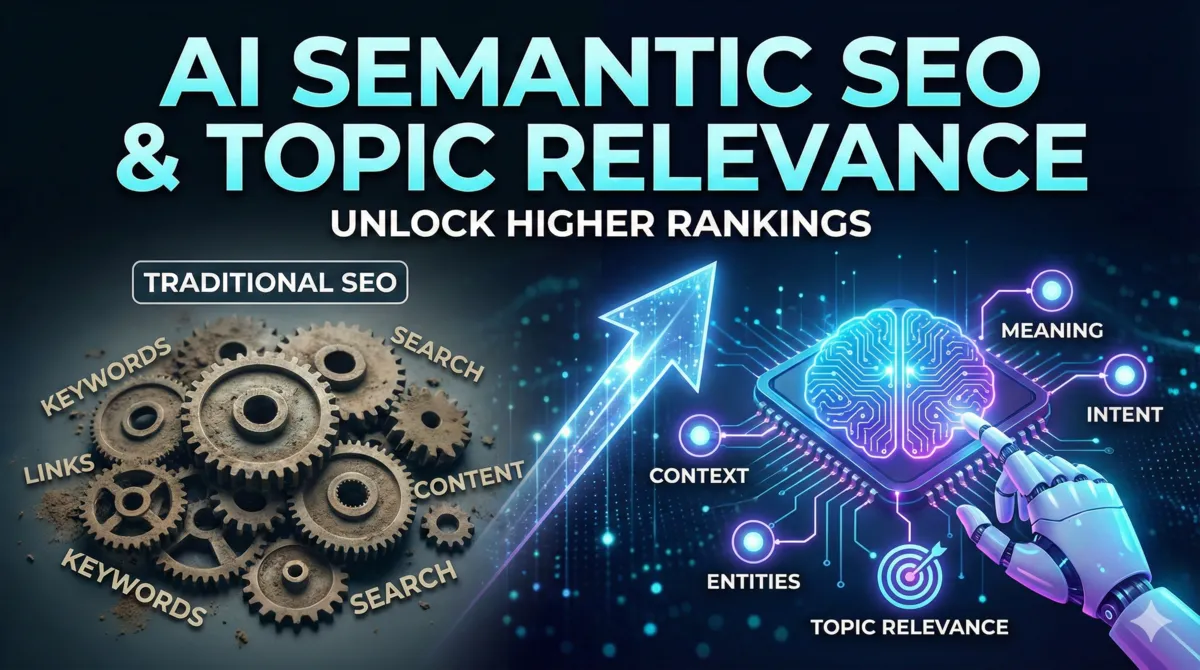
Before diving into how AI improves it, let’s define semantic SEO. In the past, SEO was largely about repeating specific keywords. Today, semantic SEO focuses on understanding the meaning behind those keywords and how they fit into the broader context of the user’s search intent.
Instead of focusing on individual keywords, semantic SEO seeks to create a more holistic, context-driven content experience. Think of it as not just answering a question, but fully exploring a topic from every angle.
The ultimate goal? Delivering more accurate, helpful, and meaningful content that matches what users are genuinely searching for.
AI and Semantic SEO: A Match Made in Digital Heaven
AI is revolutionising the way we approach semantic SEO. From content creation to content analysis, AI tools can process vast amounts of data, identify patterns, and enhance the relevance of your content.
Here are a few ways AI improves semantic SEO:
4 Smart Ways AI Strengthens Semantic SEO Performance
1. Enhanced Understanding of Search Intent
Search engines like Google don’t just look for keyword matches anymore. They analyse the intent behind each query. This shift toward understanding intent has made traditional keyword-stuffing strategies outdated.
AI-powered tools can predict the kind of answers users are searching for based on previous search behaviour. By analysing search patterns, AI helps identify what users are actually looking for, allowing you to craft content that directly answers their needs.
Whether it’s a “how-to” guide or an in-depth analysis, AI can help you better match user intent, leading to higher engagement and ranking.
2. Topic Clustering and Content Optimisation
AI doesn’t just help with individual keyword optimisation, it also enables topic clustering. Tools like Google’s BERT and other NLP (Natural Language Processing) algorithms can help analyse the broader context of your content and identify related topics.
For example, let’s say your blog focuses on digital marketing. Using AI, you could group content by major subtopics such as SEO, content strategy, social media marketing, etc. AI algorithms will ensure these topics are appropriately interlinked, providing a more comprehensive experience for readers.
3. Content Gap Identification
AI tools are excellent at identifying content gaps. Through advanced analysis, AI can compare your content to competitors and pinpoint areas where your coverage might fall short.
It can uncover long-tail keywords or subtopics you might have missed, enabling you to fill those gaps with highly relevant content.
By closing these gaps, you ensure your content remains comprehensive and authoritative, improving your chances of ranking higher in search engine results.
4. Improves User Experience (UX) Through Personalisation
Personalisation is a significant trend in modern SEO. AI can use data to create personalised content recommendations for users, which increases engagement and time spent on the site.
With AI-driven algorithms, your content can be tailored to individual preferences, fostering a deeper connection with your audience.
Semantic SEO vs Traditional SEO
| Feature | Traditional SEO | Semantic SEO |
| Focus | Keywords | Meaning |
| Optimization | Manual | AI-assisted |
| Content Depth | Simplistic | Comprehensive |
| Ranking Stability | Short-Term | Long-Term |
| User Experience | Average | High |
Traditional SEO chases rankings. Semantic SEO builds authority.
The Role of AI in Optimising Content for Topic Relevance
One of the most exciting benefits of AI for semantic SEO is its ability to keep your content relevant to a specific topic. Here’s how:
1. Semantic Analysis of Content
AI tools can analyse your content in depth and suggest ways to improve its relevance. They can assess factors like:
- Keyword Density: Ensuring that keywords are used naturally and in context, preventing overstuffing.
- Context: AI considers the broader context of the content to determine whether it truly addresses user intent.
- Tone and Engagement: Is the content written in an engaging and conversational tone that resonates with your audience? AI can flag areas that need improvement, making your writing more user-friendly.
By performing semantic analysis, AI helps you refine your content, ensuring it’s more contextually relevant and aligned with how people search today.
The tool can even suggest topics and subheadings based on what users typically search for within a given theme, making your content a one-stop resource for all related queries.
2. Related Search Terms and Entity Recognition
Google’s algorithms have become so advanced that they now focus on entities—the actual objects, places, or things related to a query.
For example, if someone searches for “best electric cars,” Google looks for content related to the entities of “electric vehicles,” “car models,” “battery technology,” and “sustainability.”
AI-driven SEO tools can help identify these entities and ensure your content covers all the relevant aspects of a topic. This entity recognition not only helps your content rank for the primary search term but also boosts your visibility for related queries, driving more organic traffic.
The more comprehensive your coverage of a topic, the more authoritative it is perceived to be by search engines, giving you an edge over competitors.
3. Predicting Future Trends
AI is excellent at identifying emerging trends. By analysing vast datasets, AI can predict future shifts in search behaviour and help you stay ahead of the curve. This foresight enables you to adapt your content strategy to emerging topics before they become mainstream, positioning you as an authority in your niche.
By analysing user queries over time, AI can uncover emerging search terms and topics that aren’t yet widely covered but are likely to gain traction in the near future.
This predictive ability is instrumental in fast-evolving industries like tech or fashion, where trends shift rapidly. By jumping on these topics early, you can generate organic traffic from people searching for the latest developments before the competition does.
Conclusion
Incorporating AI into your semantic SEO strategy is no longer a luxury; it’s a necessity. By leveraging AI tools, you can ensure your content remains relevant, contextually rich, and optimised for today’s search engines.
Whether you’re a digital marketer, content creator, or business owner, understanding the intersection of AI and semantic SEO will give you a competitive edge in 2026 and beyond.
So, what are you waiting for? Start optimising your content today, and see how AI can help you stay on top of your SEO game.
Want to learn more about combining SEO with content strategies to drive more organic traffic? Check out the SEO Growth Strategy. This blog will help you master the art of merging quality content with strategic SEO to achieve better rankings and engage a wider audience.
Frequently Asked Questions
How can AI improve my semantic SEO strategy?
AI enhances semantic SEO by analysing user intent, optimising content clusters, identifying content gaps, and improving the overall user experience. These capabilities help create content that ranks better and aligns with what users truly want.
What are content clusters, and how do they relate to semantic SEO?
Content clusters are groups of related content pieces around a central topic. By linking these pieces together, you help search engines understand your content's context and relevance, which boosts rankings.
Can AI tools help me stay ahead of SEO trends?
Yes! AI tools can predict emerging trends and analyse vast amounts of data to identify shifts in search behaviour, helping you adjust your SEO strategy and stay ahead of the competition.